
 Nathan Reynoso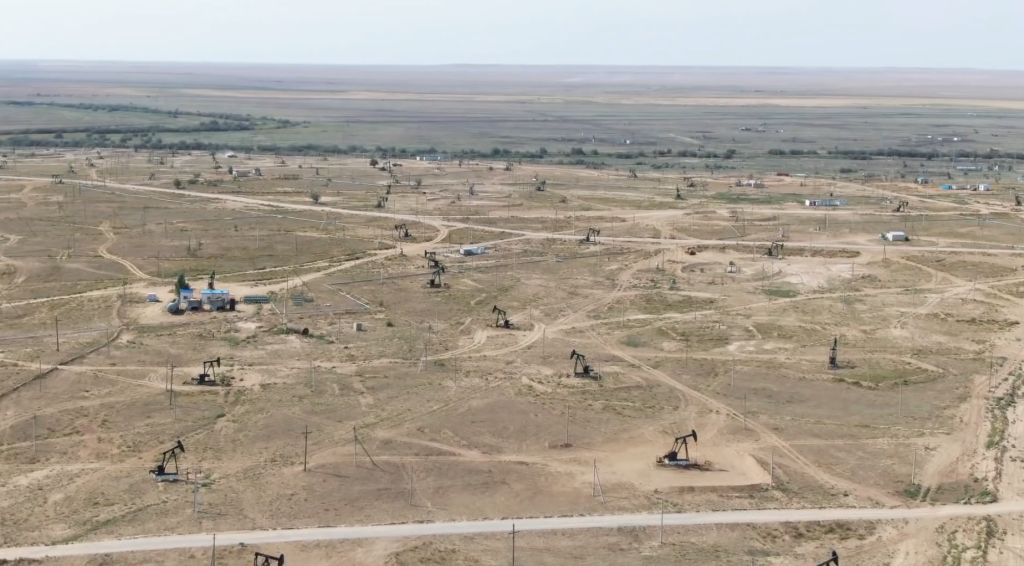
12 March 2026
LINDEN, Va. – A new report by Crude Accountability, The Case of Kokzhide: How to Damage the Environment, Health, and Livelihoods of Local Residents in Three Decades of Oil Production, documents the story of environmental exploitation in western Kazakhstan, where frontline communities bear the brunt of oil and gas extraction from the Kokzhide oil field.
Kokzhide consists of sands and a unique fresh water aquifer that has been polluted by three decades of oil production, relying on the hazardous process of enhanced oil recovery.1 Kokzhide is also the site of several additional oil fields operated by five companies: China National Petroleum Corporation (CNPC, China), KMK Munai (China), Ada Oil (South Korea), Kazakhoil Aktobe (Kazakhstan), and Urikhtau Operating (Kazakhstan).
Villages in western Kazakhstan are vulnerable to the impacts of the climate crisis, as fresh water is an increasingly scarce resource in the region. By investigating the legal status of the Kokzhide aquifer, sands, air, and water quality, and analyzing local residents’ testimonies as well as the actions by the government of Kazakhstan, Crude Accountability pieced together a narrative of Kokzhide’s environmental and health stress.
Monitoring results from 2010 to 2014 reveal that pollution levels exceeded safety standards by as much as 42 times.
Kokzhide oil production represents an insignificant 0.7% of the total national oil production yet its fresh water can meet the water needs of 1.2 million Kazakhstani citizens.
“Kokzhide is yet another tragic story of an extractive industry exploiting natural resources and irreversibly damaging the health, environment, and livelihoods of frontline communities.”
In 2022, the government of Kazakhstan agreed to decommission the wells by 2031, but the process is behind schedule, with only four wells shut down as of this writing. We urge the government of Kazakhstan to fulfill its promise to protect Kazakhstan’s precious water and its citizens, simultaneously fulfilling climate commitments by reducing methane and other greenhouse gas emissions.
For inquiries, please contact: Kate Watters, kate@crudeaccountability.org
***