
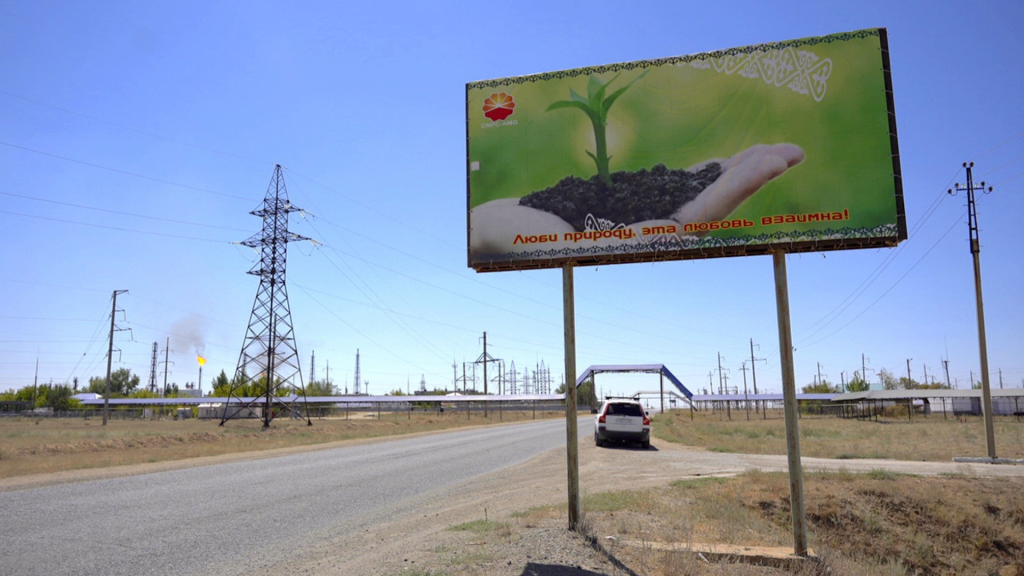
To: China National Petroleum Corporation (CNPC), KMK Munai, Ada Oil, Kazakhoil Aktobe, Urikhtau Operating
Date: May 14, 2026
Life Threatening Health Risks from the Kokzhide Oil Field Operations Threaten the villages of Shubarshi and Kenkiyak in Aktobe Oblast, Kazakhstan
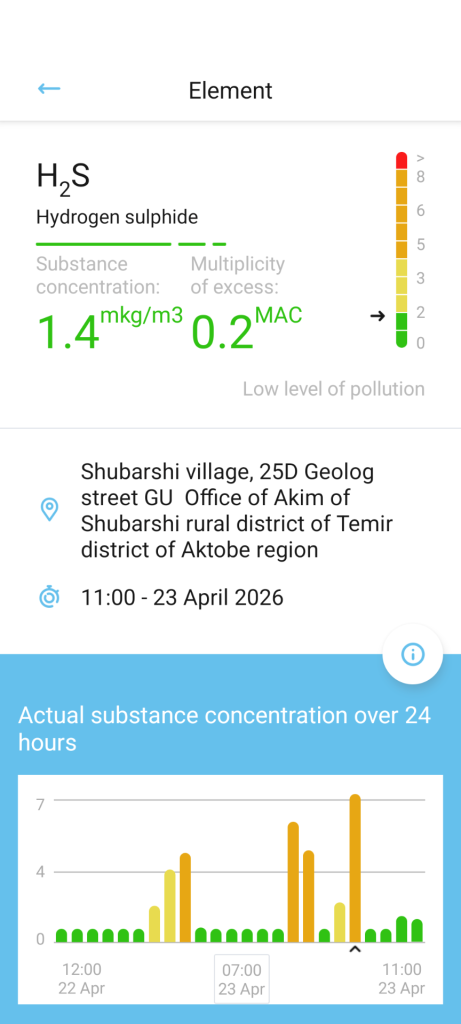
As of April 28, 2026, AirKz1 air quality governmental monitoring stations identified multiple incidences of non-compliance with toxic emissions control at the Kokzhide Oil Field. Data from the government monitoring stations revealed hazardous and life-threatening levels of H2S (hydrogen sulfide), SO2 (sulfur dioxide), and NO2 (nitrogen dioxide) in the air in Shubarshi and Kenkiyak villages, Aktobe oblast. On April 28, H2S reached an extreme 5.1 times higher than the maximum allowable concentrations (MAC).
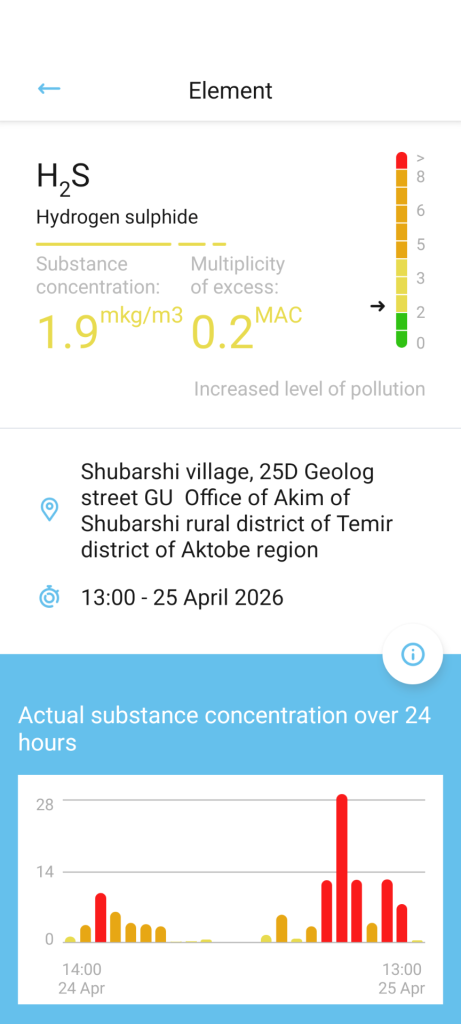
On April 20, H2S was 1.9 times higher than the MAC in Shubarshi, with emissions concentrations reaching 14.9 mkg/m3;
On April 22, SO2 was 1.2 times higher than the MAC in Shubarshi, with emissions concentrations reaching 605 mkg/m3;
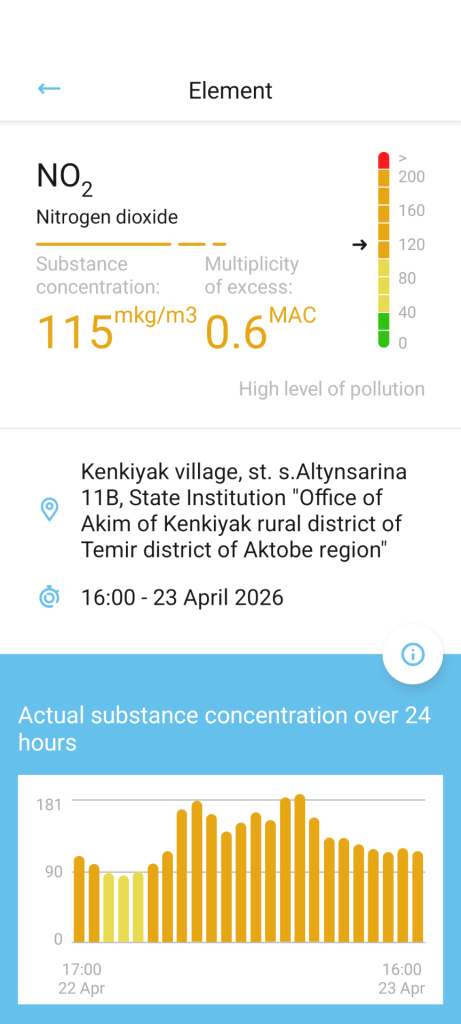
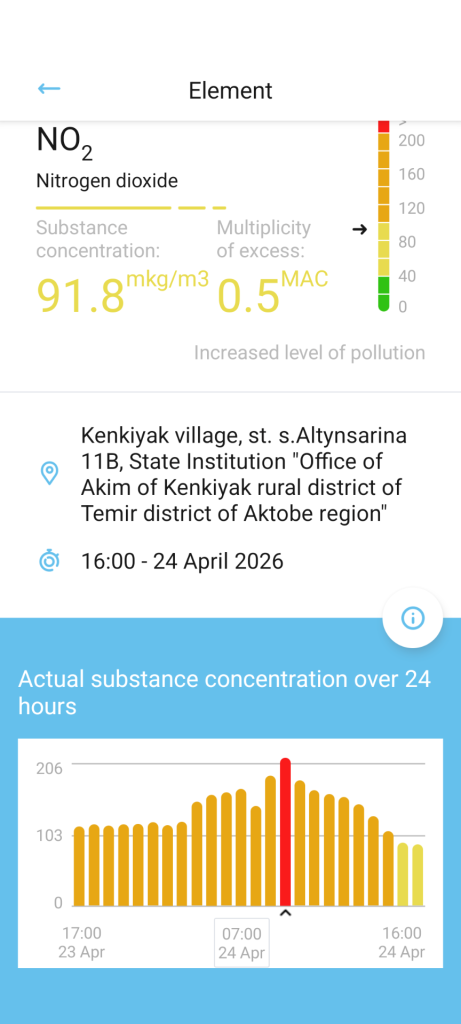
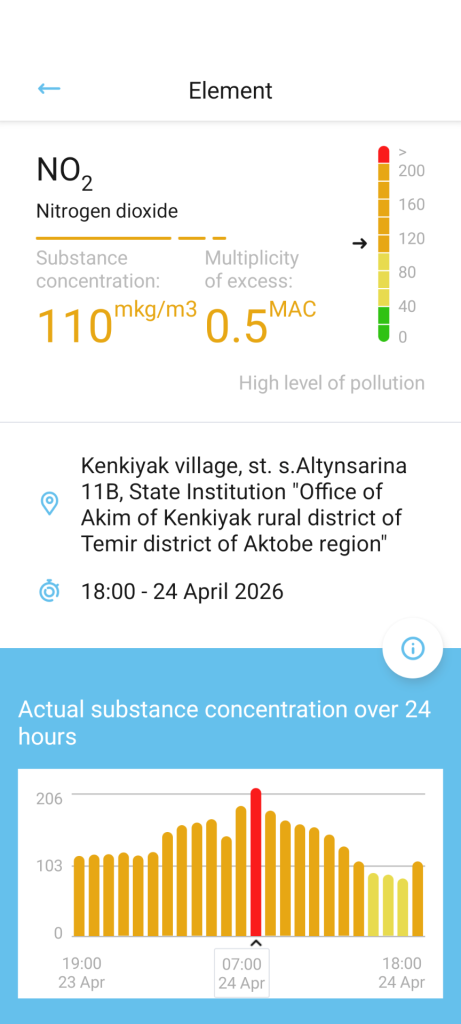
On April 24, NO2 was 1.0 times higher than in Kenkiyak, with emissions concentrations reaching 206 mkg/m3;
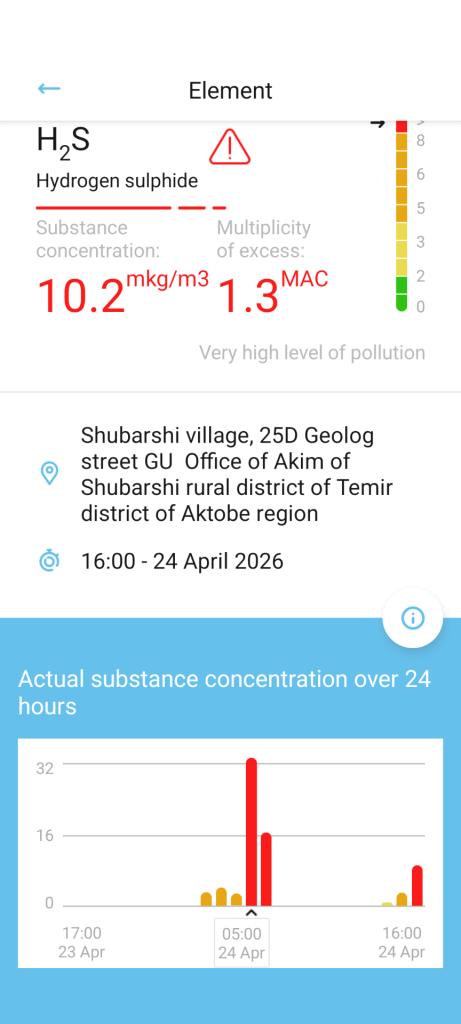
On April 24, H2S was 1.3 times higher than MAC in Shubarshi, with emissions concentrations reaching 10.2 mkg/m3.
On April 24, SO2 was 1.5 times higher than MAC in Shubarshi, with emissions concentrations reaching 733 mkg/m3.
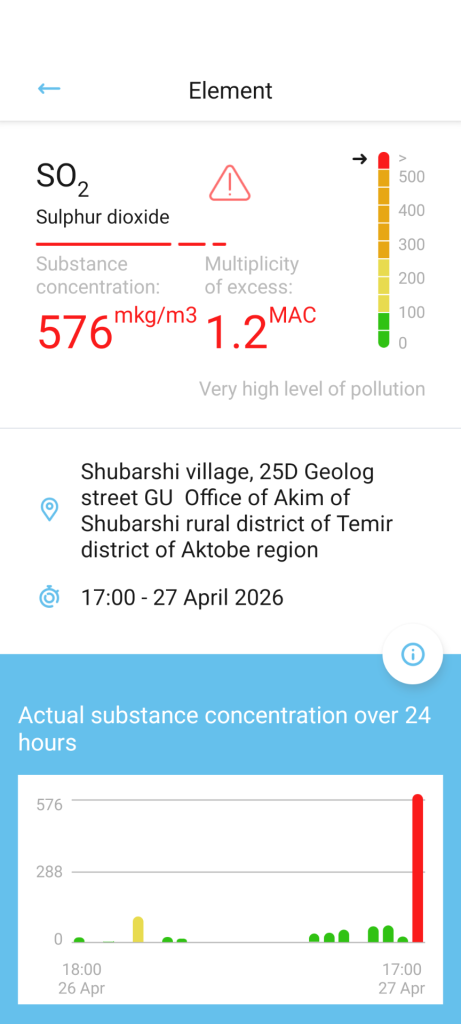
On April 27, SO2 was 1.2 times higher than MAC in Shubarshi, with emissions concentrations reaching 576 mkg/m3.
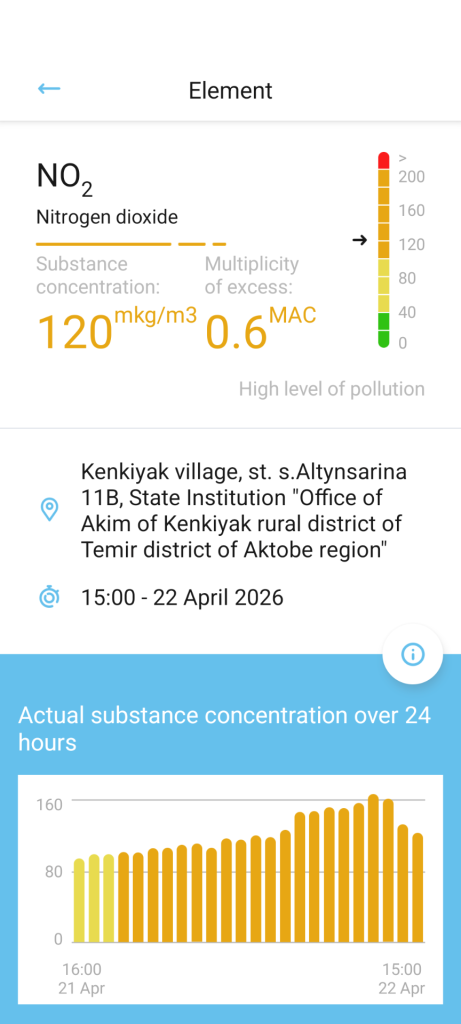
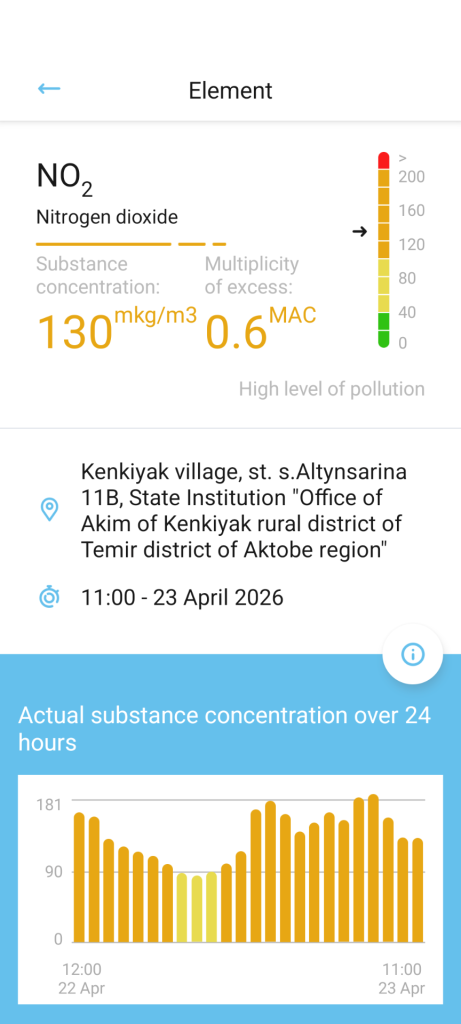
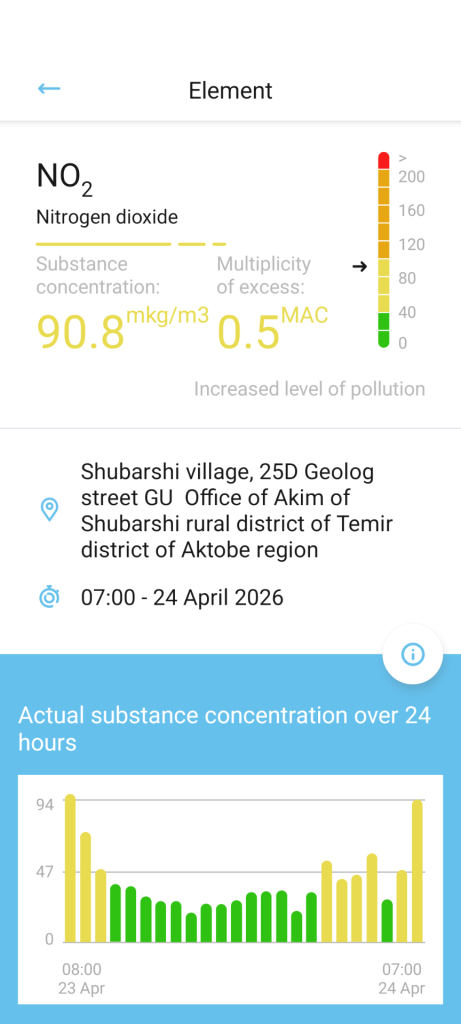
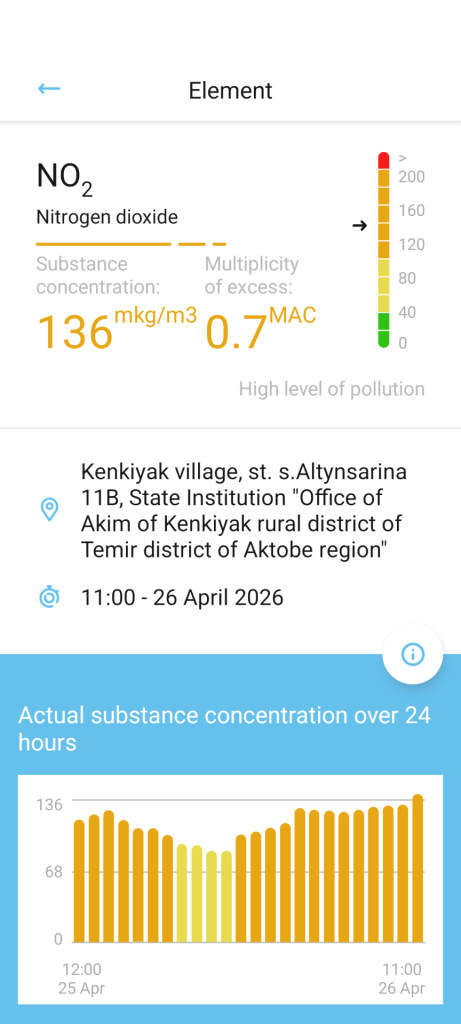
Monitoring data from April 20 to April 28 indicates that pollutant concentrations fluctuated between “very high level of pollution,” “high level of pollution,” “increased level of pollution,” and “low level of pollution” categories. Whenever the concentration stayed below a “very high level of pollution” category, or MAC, the levels alternated between “high pollution level” or “increased level of pollution” categories. Although these categories fall below MAC levels of pollution, pollutant concentrations remain unsafe and harmful to villagers’ health, exceeding global health recommendations.2 As evidenced by the attached screenshots, pollutant concentrations were at the “low level of pollution” only in isolated instances.
Crude Accountability calls for an immediate halt to the activity at the field, which is creating toxic emissions that put local families in a vulnerable and dangerous situation regarding their health and well-being. According to the Constitution of Kazakhstan, the government “set[s] as its objective the protection of an environment favorable for human life and health.”3 In light of this most recent data, we also ask that air quality monitoring stations be erected immediately in the village of Bashenkol, and that the Kenkiyak station also monitor H2S, which is currently not reflected in the AirKz application.
See screenshots of the data attached.
We look forward to your response.
Sincerely,
Kate Watters
Executive Director
kate@crudeaccountability.org
Attachment to “Life Threatening Health Risks from the Kokzhide Oil Field Operations Threaten the villages of Shubarshi and Kenkiyak in Aktobe Oblast, Kazakhstan.”
The diagram of pollution level is divided into red, orange, yellow, and green categories, in which green is the “low level of pollution” category, yellow–“increased level of pollution” category, orange–“high level of pollution” and red–“very high level of pollution.”











- https://play.google.com/store/apps/details?id=kz.khm.airkz&hl=en_US, https://apps.apple.com/us/app/airkz/id1500250250 ↩︎
- https://www.who.int/publications/i/item/9789240034228, https://www.who.int/publications/i/item/9789289013581 ↩︎
- https://www.gov.kz/memleket/entities/mfa-addis-ababa/press/news/details/1184376?lang=en ↩︎
Download a PDF of the letter:
View the timeline of our correspondence at Business & Human Rights Centre.